Computational Neuroscience with Jeremy Freeman

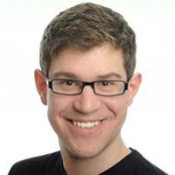
“You want to take a scientist who knows a little bit of matlab programming and try to teach them mapreduce, and write a mapreduce program in java to do image processing? It’s a disaster!”
Apache Spark is replacing MATLAB in the domain of computational neuroscience. The constraints of running MATLAB on a single machine can’t support the demands of neuroscience, which has huge collections of images and time-series data sets.
Jeremy Freeman is a computational neuroscientist who is adopting Apache Spark to be able to analyze these giant data sets that do not fit on a single machine. But Apache Spark was not designed with neuroscience in mind. For this reason, Jeremy has helped to build several libraries on top of Spark. Thunder is a library for standard, distributed representation of data. Lightning is an API for reproducible web visualizations. These abstractions sit on top of Spark, and add a layer of usability. As it turns out, solving these problems for neuroscience have produced tools that are useful in a variety of other domains. In our discussion with Jeremy Freeman, we talk about Apache Spark, neuroscience, and the technological and cultural problems faced by traditional academic research.
Questions
- What is exciting at the intersection of neuroscience and computation right now, in January 2016?
- What are the technical developments that have enabled recent advancements in neuroscience?
- What types of data do you deal with in neuroscience research, and how do you deal with the analysis?
- Why is Spark an appealing tool for computational neuroscience and dealing with images and time-series data?
- Can you walk through an experiment and give an example of how data is analyzed?
- Does research stagnate because people are stubborn and refuse to learn new technologies, or is it due to a lack of training?
- How is our changing understanding of the brain introducing us to new ideas about computation?
- What are your personal goals with your research?