Multicloud Future with Bassam Tabbara

Each cloud provider offers a different set of services which are not always compatible with each other. What are the challenges of building an application that interoperates with multiple different clouds?
The first issue is API compatibility.
Most cloud providers have a managed SQL offering, a bucket storage system, and server abstractions like virtual machines and containers. But these tools might have different APIs on each cloud. The code that you wrote to save your application data to Amazon S3 might have to be rewritten if you decide to switch your bucket storage to a different provider.
Another issue that interferes with cloud interoperability is the degree of integration on a particular cloud. If I build my application for AWS, I might be heavily integrated with Amazon’s Identity and Access Management policy system and AWS logging. Each cloud provider makes it particularly easy to connect to their integrated solutions.
There is also the problem of services on one cloud that simply do not map to a service on any other cloud. Google Cloud Bigtable does not have an equivalent service on Amazon. Microsoft CosmosDB does not have an equivalent service on Digital Ocean.
As developers, this irritates us. We want to be able to deploy our application to any cloud. We want to be able to move applications easily from one cloud to another. And we want to mix tools from different clouds together as easily as we import a library.
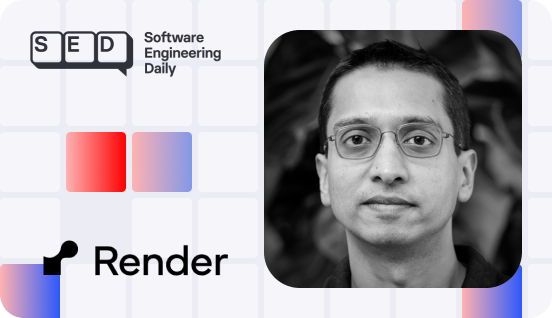
Bassam Tabbara is the CEO of Upbound, a company focused on making multicloud applications easier to deploy and operate. I spoke to Bassam at KubeCon EU 2019, and he described the problems of multicloud deployments and the opportunities for the cloud native ecosystem to become more cross-compatible.
ANNOUNCEMENTS
- Upcoming conferences I’m attending: Datadog Dash July 16th and 17th in NYC, Open Core Summit September 19th and 20th in San Francisco
- We are hiring two interns for software engineering and business development! If you are interested in either position, send an email with your resume to jeff@softwareengineeringdaily.com with “Internship” in the subject line.
- FindCollabs is the company I am building, we launched several new features recently. If you have a cool project you are working on, I would love to see it. I check out every project that gets posted to FindCollabs, and I’ve been interviewing people from some of these projects on the FindCollabs podcast
- New Software Daily app for iOS. You can become a paid subscriber for ad free episodes at softwareengineeringdaily.com/subscribe
Transcript
Transcript provided by We Edit Podcasts. Software Engineering Daily listeners can go to weeditpodcasts.com/sed to get 20% off the first two months of audio editing and transcription services. Thanks to We Edit Podcasts for partnering with SE Daily. Please click here to view this show’s transcript.