NanoClaw and the Rise of Personal AI Agents
AI agents have shown remarkable potential to function as persistent digital assistants that are capable of monitoring data, managing communications, and taking action autonomously over long periods. OpenClaw was one of the first serious attempts to fulfill that vision, connecting frontier coding agents to messaging platforms like Slack and WhatsApp and letting them run continuously in the background. However, OpenClaw largely set aside questions of security to pursue that vision, leaving credentials exposed in the agent’s environment and giving agents broad access to data and services far beyond what any given task required.

NanoClaw is an open source project that takes a zero trust approach to agent orchestration. Rather than relying on instructions to constrain agent behavior, it isolates each agent in its own Docker container, keeps credentials entirely outside the agent’s environment, and enforces human-in-the-loop approval for sensitive actions.

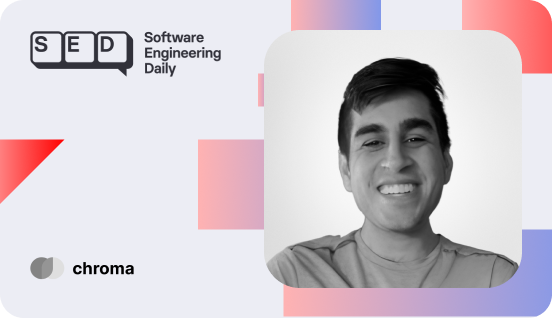
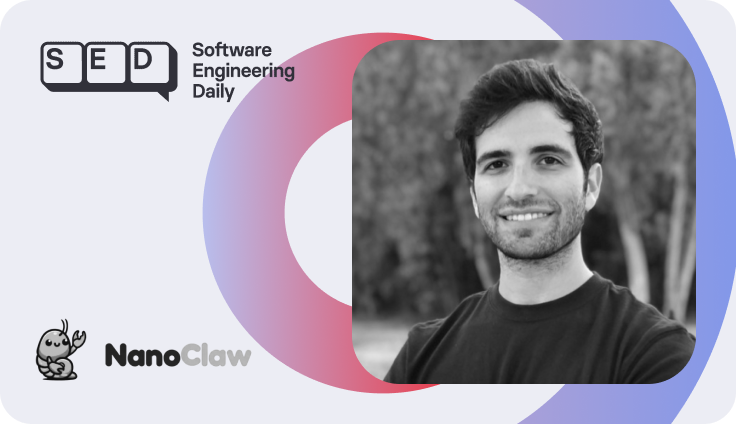
Gavriel Cohen is the founder of NanoClaw and he joins Kevin Ball to discuss the security architecture behind NanoClaw, how the agent sandbox and proxy model work in practice, how agents communicate with each other and with the host orchestration process, how the project approaches context window management and long-lived agent sessions, and more.

Kevin Ball or KBall, is the vice president of engineering at Mento and an independent coach for engineers and engineering leaders. He co-founded and served as CTO for two companies, founded the San Diego JavaScript meetup, and organizes the AI inaction discussion group through Latent Space.


Please click here to see the transcript of this episode.

Sponsorship inquiries: sponsor@softwareengineeringdaily.com
Sponsors

Agents are getting smarter every day. But even the smartest agents get stuck without the right context and the right tools. That’s where Notion comes in.

With the recent launch of Custom Agents, Notion became the collaborative AI workspace where teams and agents work side by side. And now, their new Developer Platform is turning that workspace into infrastructure developers can build on.

What stands out to me about Notion’s Developer Platform is how much they’ve built underneath the surface. The platform ships with a set of new primitives that change what you can actually do:

Workers are Notion-hosted sandboxes where you run custom code – database syncs, agent tools, webhook triggers – without spinning up your own infrastructure.

The CLI lets developers and coding agents read from Notion, take actions, and deploy Workers through one interface.

And with the External Agent API, you can bring agents like Claude or Codex into Notion as workspace participants, with real permissions and triggers, not just a sidecar tab you’re copying from.

Pulling in research sources tracked externally, syncing them into Notion, and having an agent help triage what is worth covering — all in the same place the team already works.

Learn more about Notion’s Developer Platform today at notion.com/sed

That’s all lower-case letters — notion.com/sed — to try Notion’s Developer Platform today. And when you use our link, you’re supporting our show!

Notion.com/sed


Your customer lives in the real world, and it’s messy: intermittent connections, mid-onboarding drop-offs, edge cases on devices you’ve never tested… 

Mobile apps reflect reality in a way no other surface does. Yet, from an engineering perspective, they’re the hardest to understand. 

It’s common for mobile engineers to see green backend dashboards, normal error rates, no crashes. But inevitably, somewhere, there’s a frustrated user watching your app spin. After a few seconds, they’ll lose patience, close the app, and turn their attention somewhere else. They may never come back. 

The worst part? Most observability tools never see any of it. 


bitdrift, on the other hand, captures 100% of mobile data, unsampled and in real time, so it’s immediately queryable by engineers and AI agents. It’s mobile observability, built for the real world. 


Try bitdrift today: bitdrift.io/signup.

Think about your mobile app’s source code. Once it hits the app store, it’s out in the wild. And without the right protection, decompiling is easy for malicious actors looking to steal your IP or tamper with your software.

That’s where Guardsquare comes in. Guardsquare provides the highest level of mobile app security for Android and iOS applications and SDKs. Their advanced tools integrate seamlessly into your CI/CD pipeline. We’re talking polymorphic multi-layered code hardening techniques and automated runtime application self-protection, paired with mobile application security testing and real-time threat monitoring, to deliver the highest level of mobile app security without compromise.

Don’t leave your hard work exposed. Secure your mobile applications today. Go to guardsquare.com to learn more.

Software Daily

Software Daily

 
Subscribe to Software Daily, a curated newsletter featuring the best and newest from the software engineering community.